
Ads have already appeared in AI answers and interfaces, but there is no single AI ad market yet. OpenAI runs its own Ads Manager for ChatGPT, Google serves ads from existing campaigns in AI Overviews, and Microsoft places ads in Copilot through Microsoft Advertising. Each platform has its own countries, ways to launch and limits on reporting.
So the first step is not picking the trendiest assistant. It is checking where your legal entity is based, which market you sell in, which ad account you can actually open and whether you can measure the result.
Below is the status of each platform as of September 23, 2026. It changes quickly, so open the official help page of the platform again before you add budget.
What is advertising in AI assistants?
In this guide, an ad in an AI assistant means a paid placement that people see inside the assistant, next to a generated answer or in the search results around it. It is labeled as an ad and visually separated from the model's answer. The advertiser buys an impression or a click, not the right to control what the AI says.
The same term often covers other jobs. Separate them before you plan a budget.
| Job | What the business gets | How it is launched |
|---|---|---|
| Paid ads inside AI | A labeled ad next to the answer or in the assistant interface | Through Ads Manager or an existing campaign in Google Ads or Microsoft Advertising |
| Organic visibility, or GEO | A brand mention and a link in a regular AI answer | Through work on the website, content, reputation and data availability |
| Ads made with AI | Copy, banners, video and creative variants | Through generators and editors, without buying any ad space |
| Monetizing your own AI product | Revenue from other companies' ads in your chatbot or service | Through publisher ad tech and deals with advertisers |
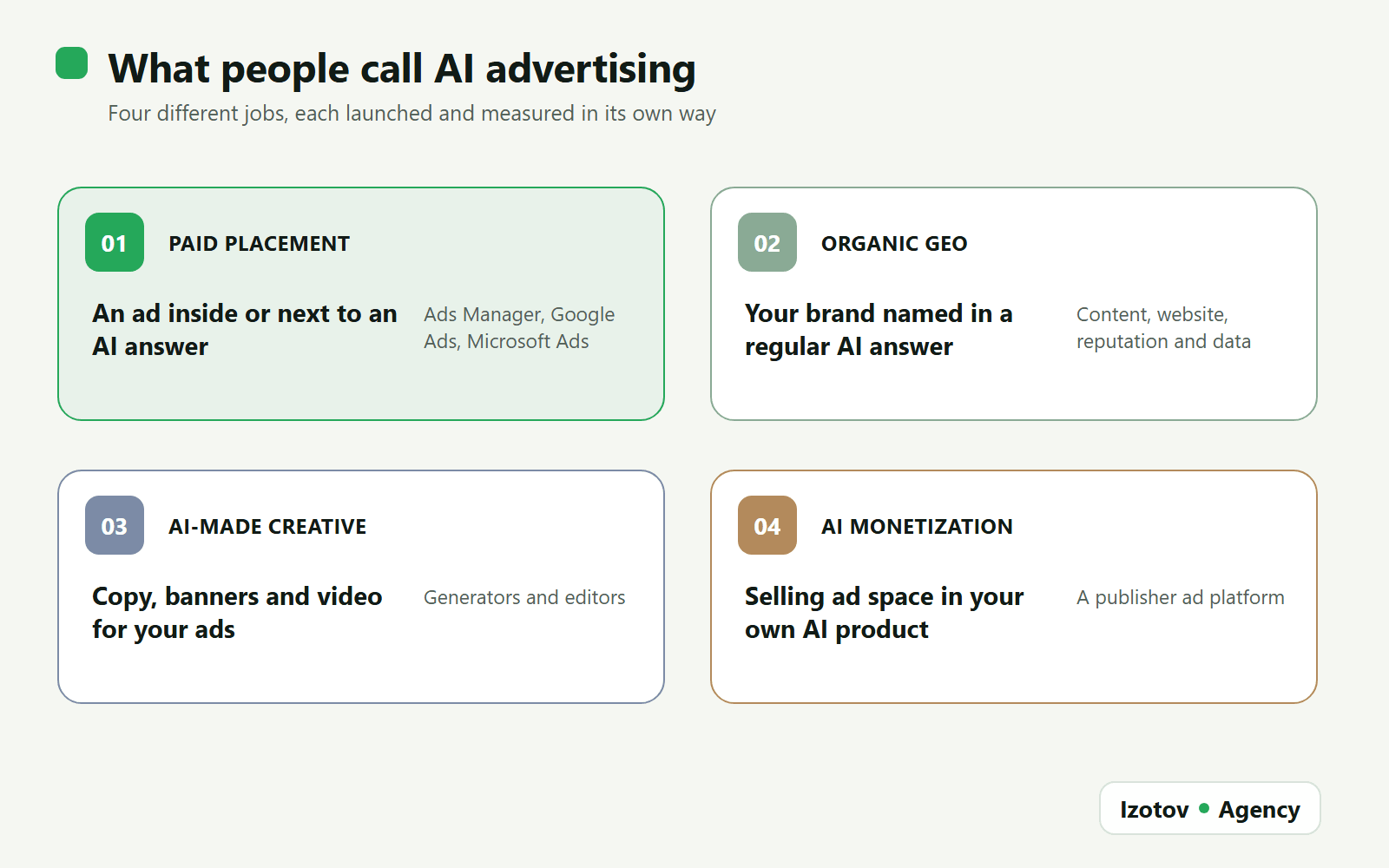
Figure 1. Paid placement, organic GEO, AI-made creative and AI monetization are four different jobs
The tools can overlap, but the KPIs differ. A paid channel is judged by impressions, clicks, spend and conversions. Organic AI visibility is tracked through mentions, citations and the share of answers that name the brand. AI-made creative is measured by production speed and by the results of the campaigns that used it.
The short answer
You can already buy ads in ChatGPT in supported countries, and through eligible Google Ads and Microsoft Advertising campaigns that serve in Google's AI features and in Copilot. There is usually no "show only in AI" switch. Claude has no ads in conversations, Google says there are no ads in the Gemini app, and Perplexity has dropped its earlier ad experiment.
How do ads inside an AI answer work?
Ordinary search ads match an ad to a query, the campaign settings and auction signals. An AI interface adds one more layer: the system understands the content of the conversation or the generated answer. That helps it pick an ad related to what the person is trying to do right now.
The mechanics differ by platform, but the path breaks down into five parts.
- The user asks a question. It can be longer than a typical search query and include selection criteria, a budget or how the product will be used.
- The service decides whether an ad is appropriate in this context. Sensitive topics and some conversations can be excluded.
- The ad system picks a relevant ad based on the available signals, campaign limits and serving rules.
- The ad appears separately from the answer. OpenAI labels it clearly and keeps it out of ChatGPT's response. In Copilot, ads appear below Copilot's own answer.
- After a click, the person lands on the website or another landing page. From there, the ad account and your web analytics record the result.
The advertiser does not buy a specific line in the AI's reply. In ChatGPT, for example, context hints help the system understand when an offer may be relevant. OpenAI states plainly that they are not exact-match keywords or targeting rules and do not guarantee delivery in any particular conversation.
Right now there are three ways to reach AI ad inventory. The first is a separate ad platform, like ChatGPT Ads Manager. The second uses existing campaigns: Google automatically considers eligible ads from Search, Shopping and Performance Max campaigns for AI Overviews. The third extends an ad network's usual placements: Microsoft Advertising automatically opts eligible campaigns into Copilot.
That leads to a practical limit. Even when a platform shows ads inside AI, you can't always split that inventory into its own campaign, exclude it or get a separate report. Check both that the format exists and how much control you really have.
Where can you advertise in AI assistants in 2026?
The table covers what people usually mean by ads in AI assistants. I checked the status on September 23, 2026.
| Platform | How ads get there | What to keep in mind |
|---|---|---|
| ChatGPT | A separate OpenAI Ads Manager | Self-serve is open to legal entities in the countries on OpenAI's list; ads are shown to Free and Go users only |
| Google AI Overviews | Eligible ads from Search, Shopping and Performance Max campaigns | No targeting of AI Overviews alone, no opt-out and no segmented report |
| Google AI Mode | Inventory and new formats developed inside Google Ads | Availability depends on the market and campaign type; some formats are still in testing |
| Microsoft Copilot | Microsoft Advertising campaigns, opted in automatically | No opt-out and no Copilot-specific metrics |
| Gemini app | No ads in the app | Google says there are no current plans to change that |
| Perplexity | A former ad experiment | The company has phased out ads and has no plans to bring them back |
| Claude | No ads in conversations | Anthropic has stated that Claude will remain ad-free |
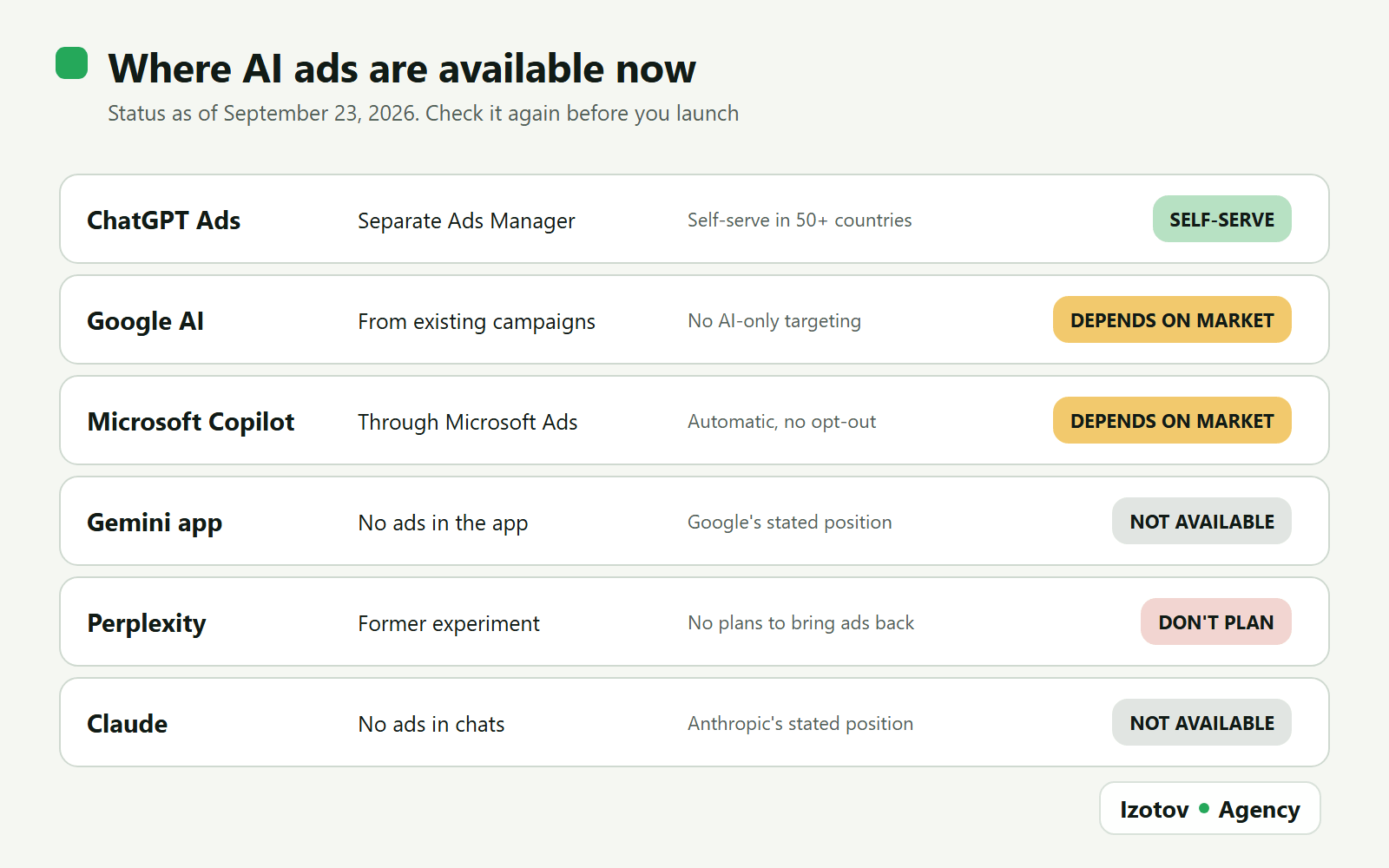
Figure 2. Where AI ads are available now, and in what form
The table does not mean you can launch all of these from one account or from any country. "Ads run on this service" and "this advertiser can set them up" are two different statements.
ChatGPT Ads
OpenAI started testing ads in ChatGPT with a US pilot in February 2026, added eight more markets over the next six months and expanded to 31 European markets in August. Ads are shown only to users on the Free and Go plans; paid plans such as Plus and Pro stay ad-free. OpenAI says it does not share conversations with advertisers and that ads do not influence ChatGPT's answers.
Campaigns run in a separate Ads Manager, still labeled Beta. At the campaign level, you choose an objective, budget, dates, countries and, if needed, platforms: the Android and iOS apps, mobile web or desktop web. The objectives are Views, billed per 1,000 impressions (CPM), Clicks, billed per click (CPC), and Conversions, optimized for an event you select. With Conversions you still pay per click or per impression, not per conversion. A campaign contains ad groups, and ad groups contain the ads.
An ad group covers one offer, category or customer need. Inside it, you can write several message variants and add context hints: descriptions of situations where the product may be useful. In OpenAI's own example, "cushioned everyday running shoes for beginners training for their first 5K" tells the system more than "running shoes". A hint still doesn't tie the ad to an exact phrase the user types.
OpenAI keeps ads separate from ChatGPT's answers and labels them. That matters when you evaluate the channel: you are buying an ad contact next to the conversation, not a mention inside the answer itself.
Self-serve access depends on where your company is based. The legal entity that advertises and is billed must be in a country on OpenAI's list, which now covers more than 50 countries, including the US, the UK, Canada, Australia and every EU member state. Some new self-serve accounts can only advertise in their home country at first. They unlock other supported countries after identity verification and a required amount of spend at home. Larger advertisers can also work through OpenAI's ads team or partners.
Google AI Overviews, AI Mode and Gemini
Google doesn't sell a separate "Gemini ads" product. Its ad access to generative search runs through Google Ads. Text and Shopping ads from existing Search, Shopping and Performance Max campaigns can appear above, below or within AI Overviews if they win the auction and match both the query and the content of the overview.
Ads above and below AI Overviews are available in more than 200 markets. Ads within the overview are narrower: English-language results in Australia, Canada, India, Indonesia, Kenya, Malaysia, New Zealand, Nigeria, Pakistan, the Philippines, Singapore and the US. The UK is not on that list. You can't target AI Overviews on their own, you can't opt out of them, and Google Ads doesn't yet give a segmented report for ads within AI Overviews.
AI Mode is developing as part of Google Search. Google says it is testing new ad formats there, and an announcement at a Google event doesn't mean broad availability. For a working plan, look at the settings in your own account and the official help page on the day you launch. You can also appear in AI Mode without a budget, as a source of the answer: the conditions and the checks are in getting a page cited in AI Mode.
As for the Gemini app, Google's head of global ads said in December 2025 that there are no ads in it and no current plans to change that. Plan Google's AI inventory around Search, not around the app.
Microsoft Copilot, Perplexity and Claude
Microsoft serves ads in Copilot through Microsoft Advertising. Ads are built automatically from your existing campaign assets, and all eligible campaign and ad types are opted in. You can't opt out, and there is no guarantee your ads will show. Eligible formats include Multimedia ads, Product ads from Shopping and Performance Max campaigns, Search ads with a logo and some vertical ad types. Negative keywords apply in Copilot as they do in search, and Microsoft doesn't yet report Copilot-specific metrics.
Perplexity was one of the first AI services to test ads, with sponsored follow-up questions in 2024. In February 2026, the Financial Times reported that the company had phased out ads and had no plans to bring them back. Until a new official ad product appears, leave it out of your media plan.
Anthropic took a different route. In a February 2026 post, it stated that Claude will remain ad-free and that users won't see sponsored links next to their conversations. People do search for "Claude ads", but there is no ad channel behind that query today.
How do you choose a platform for your first test?
Start with four checks. The first is the legal entity and billing: can the company open an ad account under the platform's rules? The second is the audience: does your segment use this assistant in the target country? The third is control: can you set a separate goal, budget and landing page? The fourth is measurement: can you separate the traffic and track conversions?
A company whose legal entity is in one of OpenAI's self-serve countries can test ChatGPT Ads. You get a dedicated ad account and explicit campaign settings. Before launch, confirm the account country, the target market and your conversion tracking options: OpenAI offers its own pixel and a Conversions API.
If your country isn't on the list yet, you can still sign up at ads.openai.com and get notified when self-serve opens, and larger advertisers can talk to OpenAI's ads team or a partner. Don't look for workarounds to the country rules.
If you already run Google Ads or Microsoft Advertising in supported markets, first check whether your existing campaign structure can reach AI inventory. Here the test often starts not with a new channel but with the quality of your product feed, landing pages, creative and the signals in your current campaigns.
Platforms without a working ad product aren't suitable for a paid test. What remains there is organic work: improving the website, mentions and citations. I explain that side in my guide on what generative engine optimization is, and if you need the work itself, there is AI citation building and technical GEO.
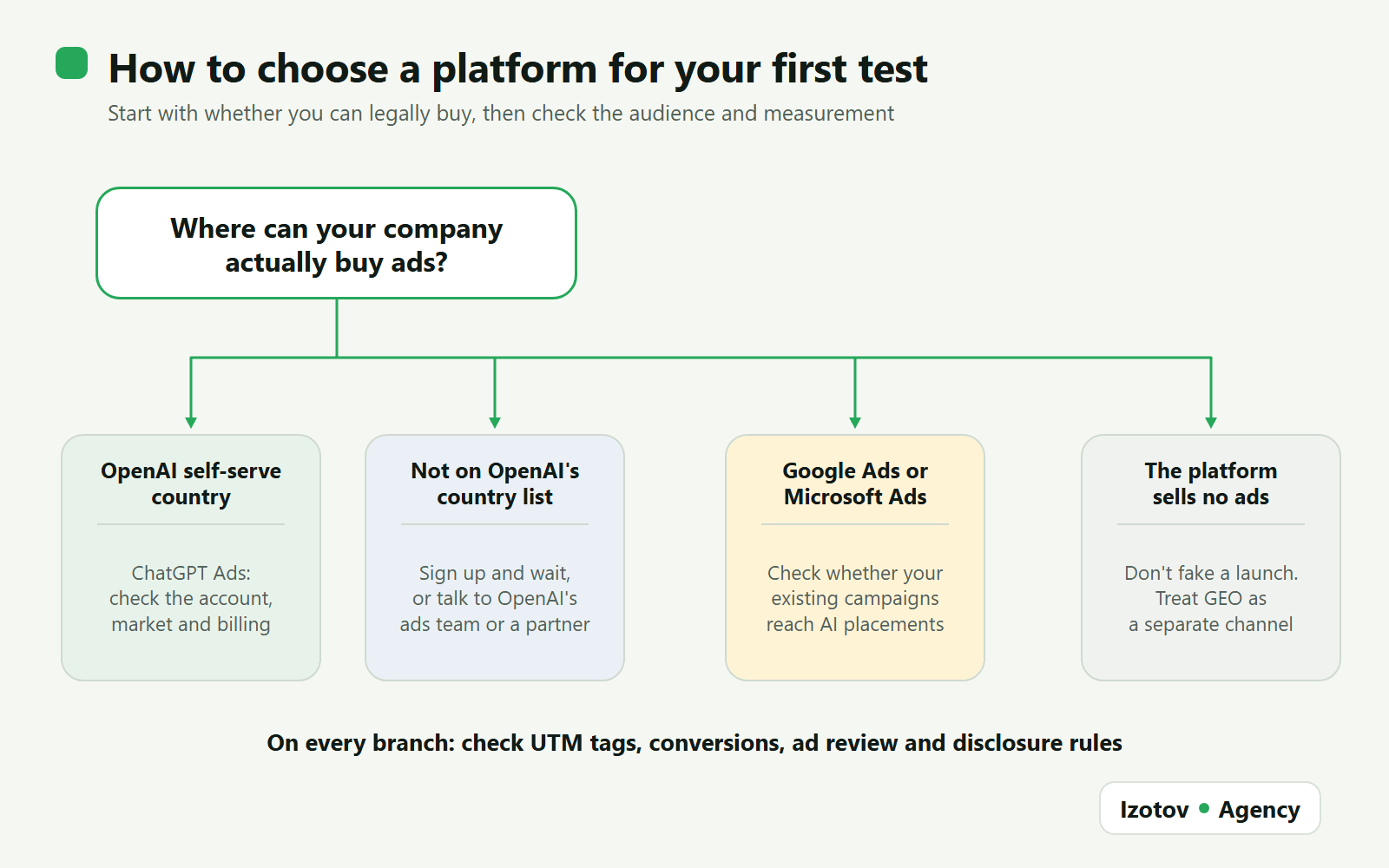
Figure 3. Start with where you can legally buy, then check the audience and measurement
Step 1. Write down the hypothesis and the goal
A test starts with a situation in which the ad should help the user. "Test ads in ChatGPT" says nothing about the result. A working hypothesis links the audience, the context in which they turn to AI, the offer and a measurable action.
One template: "If we show [offer] to [audience] at the moment they are [solving which task], we will get [target action] at a cost no higher than [acceptable value]." Take that last value from your own unit economics, not from someone else's averages in an article.
Say a company sells B2B reporting software. A user compares ways to automate reporting and asks ChatGPT to suggest options. The ad hypothesis can be about a visit to a page with a product demo and a request for a consultation.
Choose one primary goal. In ChatGPT Ads it can be views, clicks or conversions, but the test structure should match the real task. If the sale happens after a long cycle, don't optimize for clicks alone. Add intermediate events, such as a pricing page view, a form submission and a booked meeting, and judge lead quality separately in your CRM.
Before launch, write down the decision criteria. You can scale the campaign if it brings enough target actions within acceptable economics. It needs rework if the clicks are relevant but visitors don't continue on the site. Stop the test when spend reaches the limit you set in advance and nothing supports the hypothesis. These conditions protect you from endless "fine-tuning" after the budget is gone.
Don't mix different products, countries and user tasks in one test. OpenAI recommends separate campaigns for meaningfully different objectives, regions or product categories. Other platforms are built differently, but the principle holds: an isolated hypothesis is easier to measure and explain.
Step 2. Prepare the offer and the landing page
A click from an AI conversation is different from a random display click. The user has already described the task and received part of the information. The landing page should continue that context rather than open with general words about the company.
Match four elements:
- the conversation or query context in which the ad is appropriate
- the ad copy and its specific promise
- the first screen of the landing page
- the target action the campaign exists for
If the ad offers to compare implementation options, the page must actually help the reader choose, not send them to a homepage with a list of every service. If someone is looking for a product with specific features, those features and stock status should be visible right away. For services, show the scope of work, the process, relevant proof and a clear next step.
Don't copy the user's long phrasing into the ad headline. Pick out the task first. In ChatGPT Ads, you can add specific context hints to an ad group: what you offer, who it suits and when it is useful. They add meaning, but they don't replace a clear ad and landing page.
Check the page on mobile, along with the form, the checkout and the thank-you page. If the ad mentions a deadline, a price or a feature, the page must show the same terms. For a B2B service, a concrete scenario and criteria for a good-fit client work better than a vague promise of "better efficiency".
Give the page one main action. Extra links are fine as long as they don't compete with the test goal. When a visitor is asked at once to download a deck, book a call, subscribe to a newsletter, browse a catalog and message you in five messengers, the ad system gets many weak signals, and the team can't tell which result counts as success.
Step 3. Set up measurement before launch
The ad account shows spend, impressions and clicks inside its own system. To judge the business result, you need data from after the click: site events, leads, sales and lead quality. Setting up analytics after launch leaves the first days of the test without a reliable baseline.
Use a separate UTM scheme for each platform and hypothesis. For example:
| Parameter | What to record | Example value |
|---|---|---|
utm_source | The ad platform | chatgpt, google, microsoft |
utm_medium | The type of paid channel | cpc or paid_ai |
utm_campaign | Product, market and period | audit_ai_us_sep26 |
utm_content | Ad group and variant | b2b_compare_a |
utm_term | Context or segment, if allowed and useful | reporting_automation |
Don't put personal data or the text of a real conversation into UTM tags. Values should be short, stable and clear without a lookup table that only one employee has.
Split events by value. Micro-conversions show that a visitor kept exploring: read an important section, opened pricing or started filling in a form. The primary conversion reflects a business action: a submitted lead, a payment, a booking or another confirmed result. Import into the ad platform the event that occurs often enough and is truly tied to the optimization goal.
Before launch, click the tagged link yourself. Check that the visit shows up in GA4, the campaign parameters survived, the right events fired once and the lead reached the CRM. If you use server-side conversion tracking or the platform's pixel, such as OpenAI's pixel and Conversions API, check the diagnostics in the ad account.
A separate report matters because some AI inventory can't be segmented. Google states that it doesn't yet give a separate breakdown for ads within AI Overviews, and Microsoft has no Copilot-specific metrics. In that case you can't attribute the result solely to the AI placement. The report should honestly show the level of detail you actually have.
Organic visits from AI assistants can be tracked too, but that is a different dataset. I describe the GA4 setup in a separate guide on how to track ChatGPT traffic in GA4. Regular measurement with one method and a monthly report is AI visibility monitoring.
Step 4. Create the campaign and pass ad review
The fields depend on the platform. The general sequence is similar: verify the account and payment, choose a goal, set the geography, set the budget, build ad groups, upload creative and configure conversions.
In ChatGPT Ads, the campaign sets the objective, budget, dates, countries and platforms. Inside it, you create ad groups by product, service or customer need. Separate scenarios that need different messages or landing pages. Prepare several ads for each scenario, so you test meaning rather than a cosmetic reshuffle of words.
Write context hints concretely. Name the product, the audience and the situation. A generic hint like "marketing services" adds almost nothing. "Audit of a B2B brand's visibility in ChatGPT and Gemini answers for a marketing team" describes the offer much more precisely. This is an example of structure, not a promise that the ad will show for a specific query.
In Google and Microsoft, start by checking your existing campaigns. For Google AI Overviews, what matters most is ad relevance, landing page content, correct product data and campaign types that are eligible to serve there. You can't bid for AI Overviews alone. For Copilot, Microsoft recommends Performance Max and requires a logo on Search ads for them to be eligible. Rely on the formats and reports actually available in your market.
Before you submit for review, check:
- that the ad matches the page content
- that there are no unsupported comparisons or promises
- the rules for sensitive categories
- that the geography, language, currency and dates are correct
- that the link and conversions work
- that the required ad disclosures and advertiser details are in place
Step 5. Run a limited test
There is no universal starting budget for AI ads. Account minimums vary by currency and country: in ChatGPT Ads, the minimum daily budget for an account billed in US dollars is $25. The acceptable cost of a result depends on your margins and conversion rate. Base the test budget on how much the company is willing to pay to check one hypothesis.
Set four limits before launch:
- the maximum total spend
- the acceptable spend without a primary conversion
- the minimum period needed to collect a signal
- early stop conditions, such as site errors, irrelevant traffic or rejected ads
For a new channel, it is safer to use a separate campaign or another way to isolate the budget. OpenAI recommends that new advertisers start with a daily budget, so they can watch delivery and performance before committing to a total for the whole period. The daily budget is an average over a seven-day period, so spend on a single day can reach up to twice the daily amount.
Don't change the audience, page, goal and ad all at once after the first few clicks. First make sure the technical side works and the traffic matches the hypothesis. Then change one significant element and note the date. Otherwise any improvement or decline will stay unexplained.
Step 6. Evaluate the result and decide
The first level shows whether delivery happened: the ads passed review, got impressions and didn't hit account or budget limits. The second is user response: clicks, CTR and the quality of visits. The third ties the channel to the business through conversions, CPA, revenue and lead quality.
Look at the metrics together:
| What you see | Possible cause | Next step |
|---|---|---|
| Almost no impressions | Narrow geography, account status, weak relevance or limited inventory | Check eligibility, review status, settings and the status of the format |
| Impressions but few clicks | The ad doesn't continue the user's task | Rewrite the message and check how it fits the context |
| Clicks but no actions | The page doesn't back up the promise, loads slowly or adds extra steps | Analyze on-page behavior and fix the path to the goal |
| Conversions but weak leads | The promise is too broad, or the optimization criterion is wrong | Narrow the offer and segment, and send quality conversions back |
| CPA fits your economics | The hypothesis holds under current conditions | Increase the budget gradually while keeping quality in check |
Note reporting limits separately. If Google doesn't segment ads within AI Overviews, the result belongs to the campaign or ad group, not to one placement. If Microsoft doesn't report Copilot separately, you can't call the whole campaign's effect a result of AI advertising.
Decide on scaling only after checking conversion quality. A cheap lead doesn't help if your sales team considers it irrelevant. Compare the ad conversion with lead quality, cancellations and margin.
A test can be negative and still useful. It shows that this particular combination of platform, audience, offer and page didn't meet the criterion in the chosen period. That conclusion is more precise than a general "AI ads don't work".
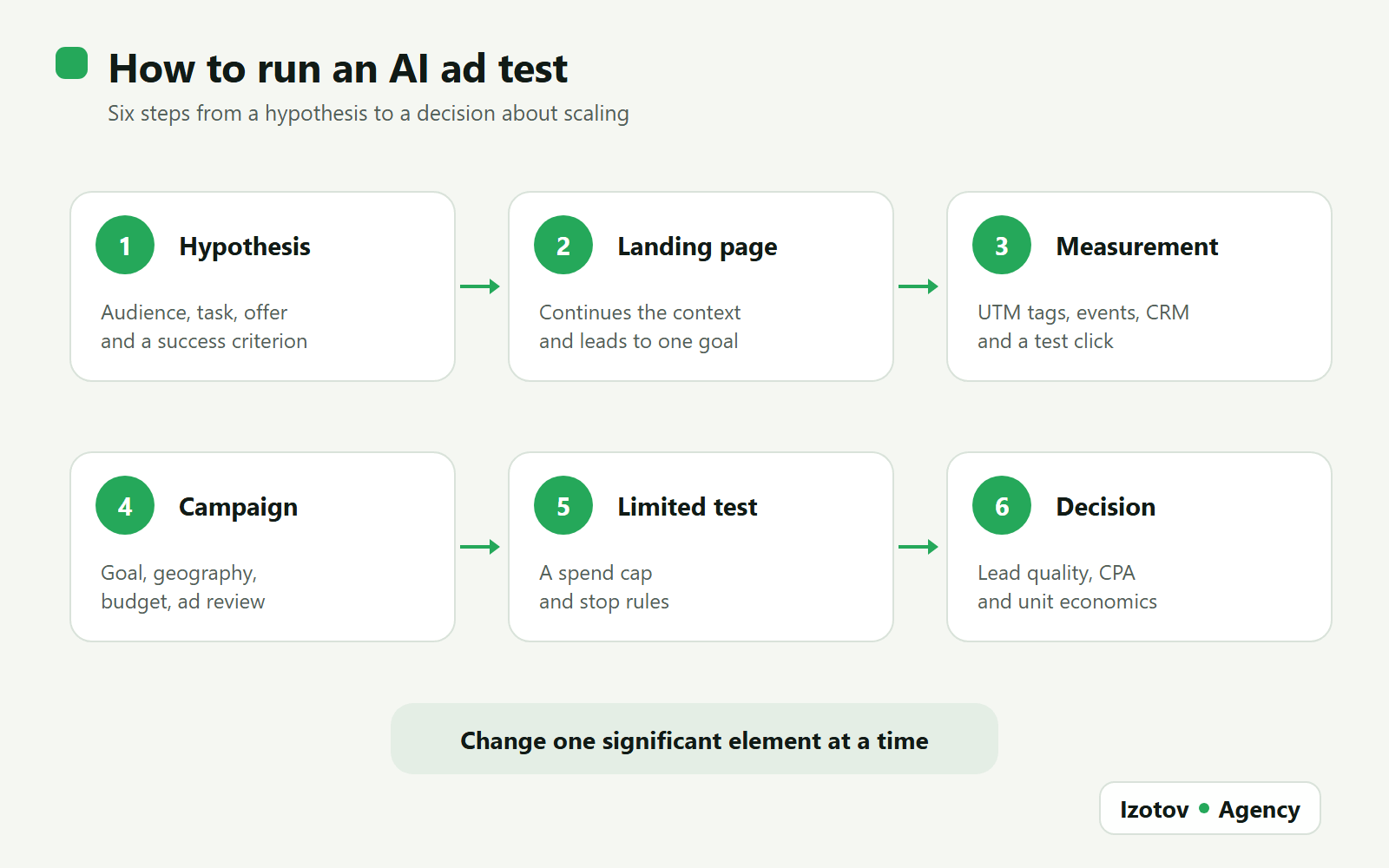
Figure 4. Six steps from a hypothesis to a decision about scaling
Ad disclosure and legal limits
On every platform above, the platform labels the ad itself: ChatGPT keeps ads visually separate and marked, and Google and Microsoft label their ads too. That doesn't take responsibility for the content off the advertiser. Claims in the ad must be truthful and supported, and comparisons with competitors need evidence.
Check category restrictions too. Platform policies for sensitive categories such as finance, health or pharmaceuticals can be stricter than the law of a specific country. In Copilot, for example, prescription drug ads don't show without specific disclaimers. Passing ad review doesn't guarantee compliance with every rule that applies to your business.
Conversion tracking involves personal data. If you use a pixel or a conversions API, make sure your consent banner and privacy policy cover it, especially for visitors in the EU and the UK. OpenAI also asks advertisers targeting the EEA or Switzerland to avoid custom audiences while ad personalization is unavailable there. If a setup isn't covered by the platform's terms or your contract, hold the launch until a lawyer has looked at it.
Common mistakes
The first mistake is buying "visibility in AI answers" from a contractor when what they actually sell is ordinary GEO work or content placement. That service can be useful, but it isn't an ad campaign with a budget, impressions and clicks.
The second is assuming availability. News about a format launch, an interface demo or a case from another country doesn't mean the ad account is open to your legal entity and your market.
The third is carrying the logic of exact-match search keywords into a conversational interface. Context hints in ChatGPT help describe relevance but don't guarantee a specific conversation. In Google AI Overviews, whether an ad shows also depends on the query, the content of the overview, the auction and eligibility rules.
The fourth is launching without tested analytics. If UTM tags, events and the CRM link don't work before the first impression, you can't rebuild the full picture afterwards.
The fifth is drawing conclusions too early. A few clicks prove neither that the channel works nor that it doesn't. Tie the decision criterion to the test budget, the number of target actions and lead quality in advance.
The main points
Ads in AI assistants are already a paid channel, but access is fragmented. ChatGPT Ads suits companies with a legal entity in a supported country and gives the most direct control. Google and Microsoft mostly connect AI inventory through existing campaigns, often without separate control or reporting. Claude, the Gemini app and Perplexity don't sell ads in conversations today.
The first step before a test is simple: pick one platform and open its official help pages for your country and account. If access is confirmed, write down the hypothesis, prepare a page that continues the context, set up analytics and cap the budget. That way the new format gets tested as a normal performance channel, not as a promise to be "inside the AI".
If you want not only to buy impressions but also to appear in the AI answers themselves, book an AI visibility audit with Izotov Agency. I'll check which questions get your brand named by ChatGPT, Gemini, Perplexity and Google AI, who gets recommended instead of you and which sources the answers cite, and give you a 30–90 day plan. After that, the same prompts can be tracked in monthly AI visibility monitoring.
Sources
- OpenAI Ads, OpenAI.
- Ads Manager Availability, OpenAI Help Center.
- Create Campaigns for ChatGPT Ads, OpenAI Help Center.
- Create Ad Groups for ChatGPT Ads, OpenAI Help Center.
- ChatGPT Ads expands across Europe, OpenAI, August 2026.
- About ads and AI Overviews, Google Ads Help.
- Ads in AI Mode, Google.
- Google denies ads are coming to Gemini in 2026, Search Engine Land.
- About ads in Copilot, Microsoft Advertising Help.
- Perplexity stops testing advertising, Search Engine Land.
- Claude is a space to think, Anthropic.